Looking back on my five weeks with Curtins, I feel really fortunate to have been part of this Summer Insight Programme. It gave me the chance to step outside of university learning and get a real taste of how engineering works in practice. The mix of technical sessions, career advice and guest speakers made every week different, and by the end I felt I had a much better picture of what it’s like to be part of the Curtins team.
Before the programme, I knew my understanding of industry practice was limited. Each week introduced a new theme from Curtins’ history and culture, to digital innovation, sustainability and career development and helped me piece together what it actually means to be an engineer in today’s world. In the first week, I really enjoyed hearing Neil Parkinson talk about the company’s history and values, which gave me a sense of the ethos behind Curtins. Tom Leake’s walkthrough of the Imperial College White City Campus project was a highlight because I could see how every design decision had a purpose. The site walk after completion particularly stood out to me it was a reminder that the drawings and models we work on eventually become real, functioning places. I also found Marc Barlow’s reflections on Continual Professional Development (CPD) and the Curtins Academy inspiring. It showed me how much support there is for graduates as they start their careers, which is encouraging as I think about my own next steps.
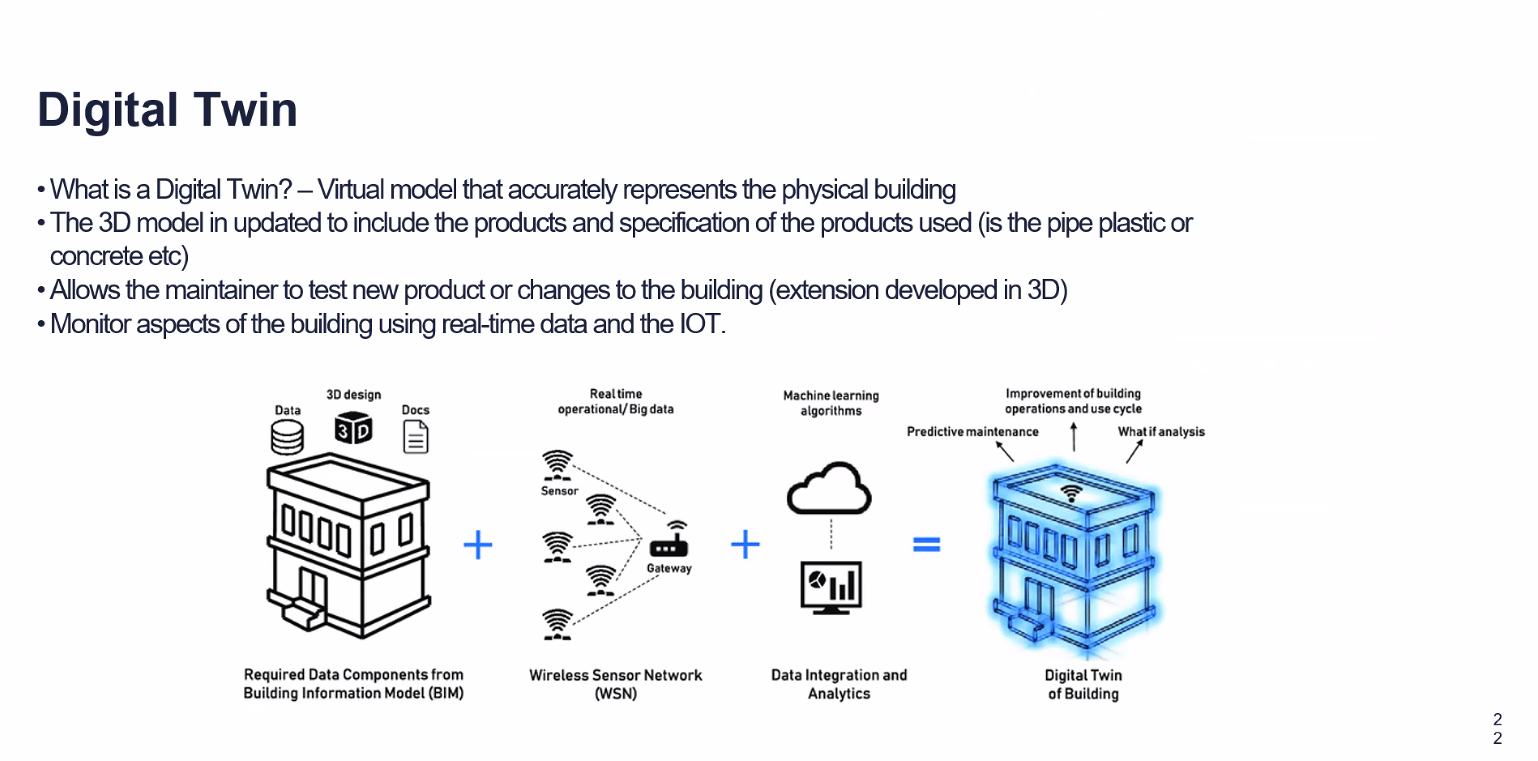
The week that made the biggest impact on me was focused on digital innovation. Jim Hall, President of the Institution of Civil Engineers (ICE), encouraged us to think about the bigger picture not just the technical side of engineering, but the leadership role we have in facing climate change. What impressed me most was the concept of the Digital Twin. I had heard the term before, but seeing how drones, LiDAR and scan-to-BIM can create such accurate models really amazed me. What struck me even more was how useful these models remain after construction, supporting the people who manage and use the structure throughout its life. It felt incredibly practical and forward-looking. Hearing from David Price, Curtins’ IT Director, also opened my eyes to just how advanced Curtins already are in digital delivery, from being the first in the UK to achieve a BIM Kitemark to developing embodied carbon tools. It made me think seriously about the kind of engineer I want to be, and I know I want to contribute to the industry with the same digital outlook.
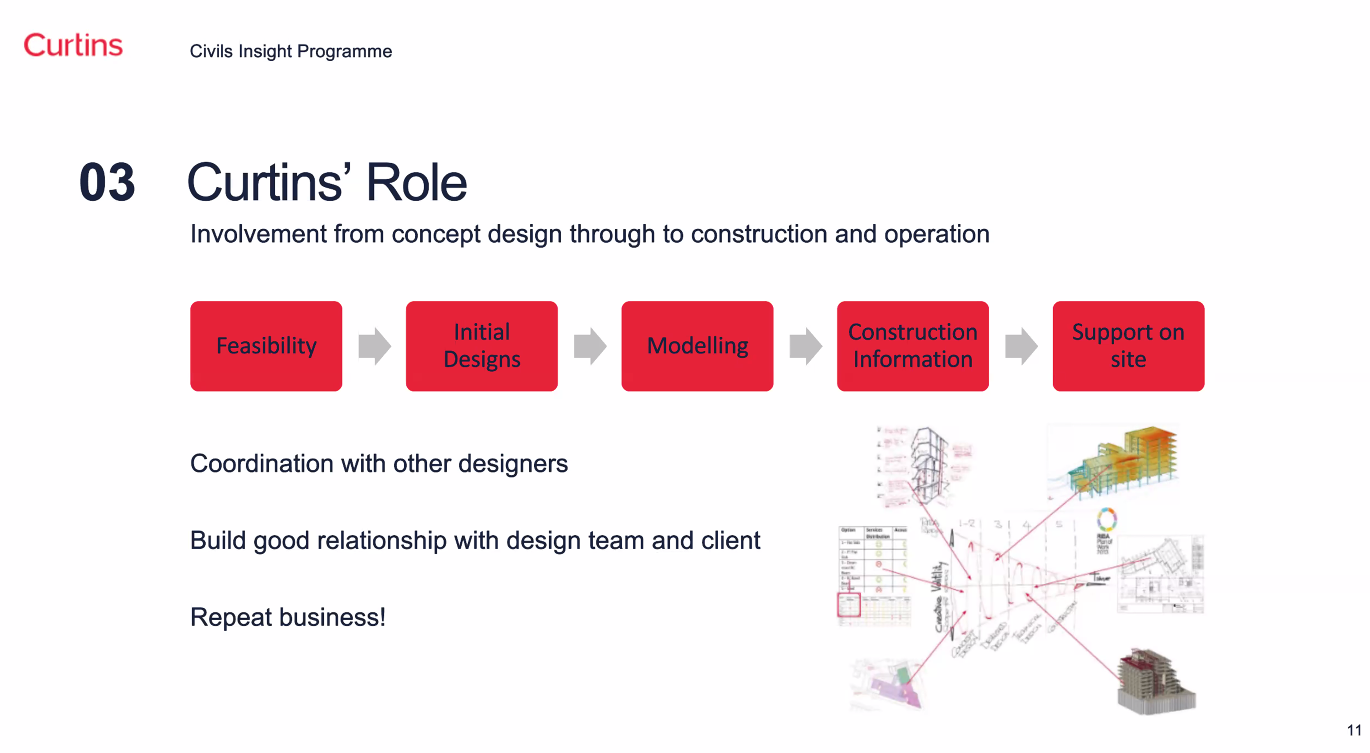
Week 3 gave me a clearer view of how projects are actually delivered. Michael Smith explained the RIBA planning stages and how early decisions can shape an entire project. I was fascinated by how different tools are used at different points: Bluebeam for quick mark-ups, Civil 3D and AutoCAD for drawings, Micro Drainage for modelling and Navisworks for clash detection. I realised how much coordination is needed between disciplines like drainage, highways and earthworks, and how easy it would be to make mistakes without these tools. It made me appreciate the software I’ve been learning at university in a new way.
The sustainability sessions were another turning point for me. Learning about SuDS, net zero, and carbon calculation reminded me of the responsibility we carry as engineers. I’ve always believed in the idea of ecodesign, creating with the future in mind, but this placement helped me see where I must begin. Curtins showed me that sustainability needs to be embedded in every design decision, not left as an afterthought. This is something I really want to carry forward into my career, because I believe it’s how we can make the world better for future generations.
Even though the programme was online, I never felt disconnected. The breakout tasks, guest speakers and group activities kept things engaging, and I felt supported throughout. Having access to the Pinnacle Series platform was also a huge bonus. I used it to build my knowledge of BIM and AutoCAD, which I know will be useful going into my final year.
Overall, this placement has been such a valuable experience for me. It gave me confidence in my skills, opened my eyes to the realities of practice, and made me more excited about the career I’m working towards. I’m really thankful to Curtins and their partners for making the programme so inspiring, and I’ll carry these lessons with me as I take my next steps in engineering.


 Rhea Erinjeri